

Who We Are
From Assessment to Insightful Action
Most organizations already have data. What’s often missing is confidence in how to interpret it and discernment about what follows. Not every assessment leads to an intervention. This is intentional, so that actions fit the situation rather than forcing a response.
In practice, this approach often shifts the decision itself — from “what should we roll out?” to “what does this situation require right now?” Sometimes that leads to action. Sometimes it leads to adjustment, sequencing, or restraint.
We work with leaders and teams to notice information that formal processes often miss, especially where fear, hierarchy, or uncertainty shape what people raise, soften, or hold back. Our focus is on sense-making: interpreting recurring pressures and strengths in context so decisions are grounded in reality, not assumptions.
Only then do we support targeted action, whether through coaching, facilitation, learning, or planning. Where needed, we help embed those decisions into organizational practices, policies, and risk controls, not individual workarounds.
-
We help organizations move beyond high-level data to understand what’s actually driving people-related challenges. Our work focuses on the conditions that affect what reaches decision-makers about risk, workload, and strain, ensuring assessment findings are interpretable and usable — not just complete. This is especially important in environments where hierarchy, accountability, or competing pressures shape what gets raised, tone down, or held back.
-
Our perspective is grounded in Workplace Psychological Health & Safety. This lens allows us to examine persistent challenges through risk, readiness, and system conditions rather than individual blame or cultural slogans, bridging Occupational Health & Safety, HR, and leadership concerns in a way that supports both compliance and performance.
-
We don’t treat psychosocial risk as separate from how organizations are designed and governed. Our work connects assessment results to planning, policy, quality improvement, and risk management so responses can be embedded into everyday ways of working — not left to individual leaders or teams to carry alone.
-
Bridge Teams is deliberately independent, drawing on established, evidence-based approaches and applying them in ways that fit context and purpose. This allows us to offer clear recommendations grounded in assessment results, including when clarification, waiting, or modest system adjustments are warranted, rather than moving prematurely to intervention.
-
Our work strengthens an organization’s ability to notice, interpret, and respond to changing conditions over time. By improving how information is interpreted and decisions are made, teams build durable capacity to adapt — not through repeated interventions, but through better judgment.
Why Choose Bridge Teams?
Our Core Values
-

Trust and Psychological Safety
We focus on creating conditions where information can be expressed accurately and responsibly. Trust and psychological safety are not treated as outcomes to be engineered, but as essential conditions for honest reporting, sound assessment, and good decision-making.
-
Leadership as Responsibility, Not Role
We understand leadership as something exercised at many levels of an organization. Our work supports formal and informal leaders in recognizing how their actions shape trust, clarity, and the flow of information during periods of pressure or change.
-

Context-Sensitive Practice
No two workplaces operate under the same pressures or constraints. We work carefully within context, adapting our approach based on evidence, judgment, and the realities organizations face — rather than applying fixed models or generic solutions.
-

Reflective, Evidence-Informed Learning
We value reflection as a discipline, not a personality trait. Our work encourages leaders and teams to pause, examine assumptions, and learn from experience so decisions are informed by evidence and grounded in current conditions and lived experience.
-
Individual Experience, System Accountability
We take individual experience seriously without placing the burden of change on individuals alone. Our work attends to system design, roles, policies, and decision structures so responsibility for improvement is shared and sustainable.
About
Geoffrey Thompson
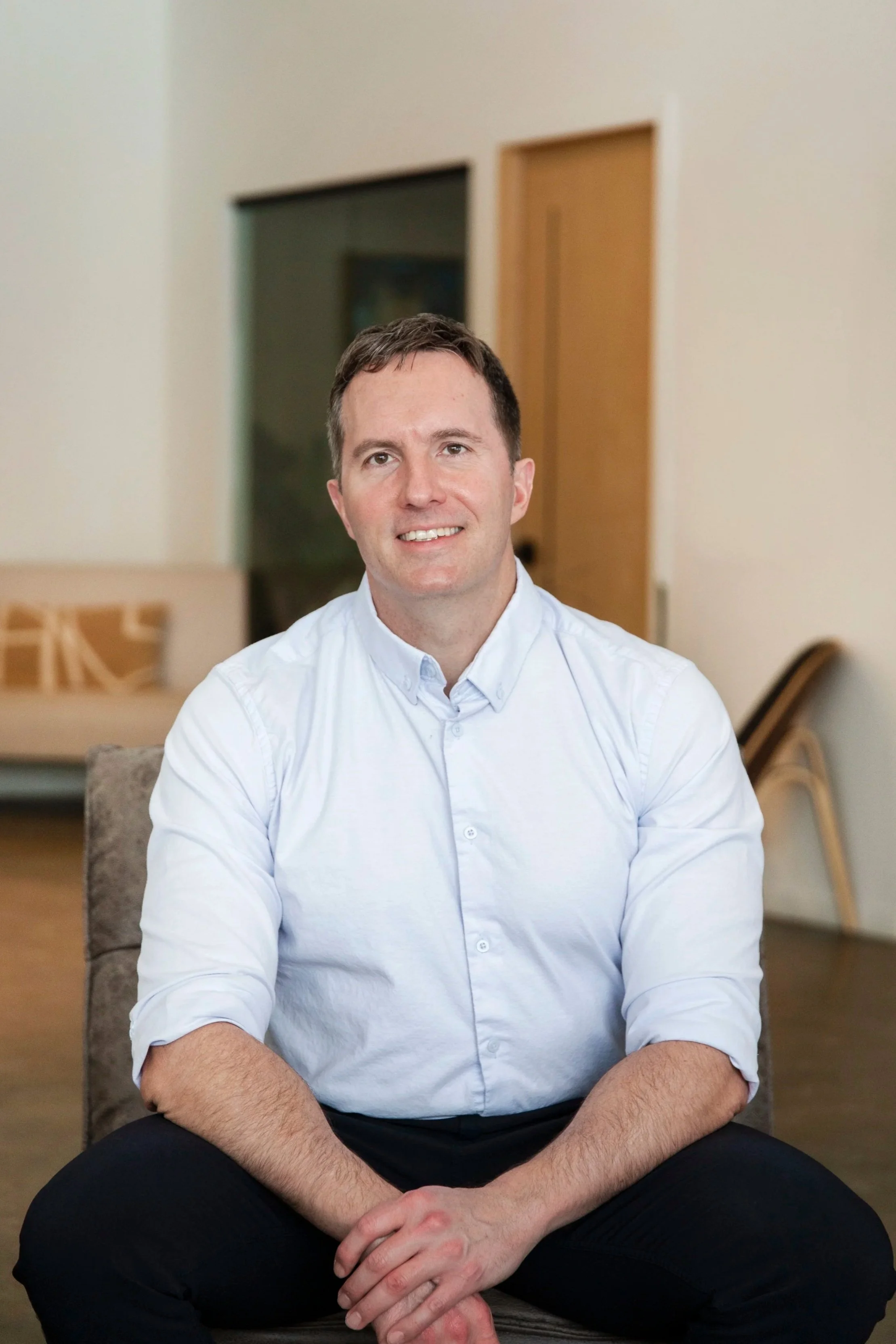
BSN, MPHGeoffrey Thompson is an organizational development coach, facilitator, and workplace psychological health & safety practitioner. His work focuses on helping organizations understand what shapes trust, information flow, and decision quality — particularly in contexts involving psychosocial risk, psychological safety, and organizational change.
Drawing on more than two decades of experience in occupational health, systems improvement, and organizational development, Geoffrey brings a whole-person and whole-system lens to assessment and sense-making work. His background in health and safety informs how he examines risk, workload, strain, and readiness for change, without approaching this work from a clinical or treatment role.
Geoffrey works with leaders and teams to clarify what is actually happening before decisions are made. He is especially skilled at helping organizations interpret assessment results, bring attention to perspectives that may be muted by fear or hierarchy, and translate insight into responses that are appropriate to the situation — whether that involves action, adjustment, or restraint.
His facilitation style is participatory and evidence-informed, grounded in real-world organizational pressures and a deep respect for how trust shapes what reaches leadership and influences outcomes. Across coaching, planning, and systems-focused work, Geoffrey’s aim is to help organizations respond to complexity with clarity, judgment, and shared responsibility.
Certifications & Guiding Frameworks
-
Certified EQ-i 2.0 / EQ 360 Practitioner (2024)
Certified Organizational Development Coach (CODC), Symbiosis Coaching (2024)
Associate Certified Coach (ACC), International Coaching Federation (in progress)
-
Certified Psychological Health & Safety Advisor, Canadian Mental Health Association (2016)
-
Letter of Accomplishment in Change Management, University of Manitoba (2019)
Endorsed Facilitator, International Association of Facilitators (in progress)